Equipment
Irradiation Testing for Military Equipment
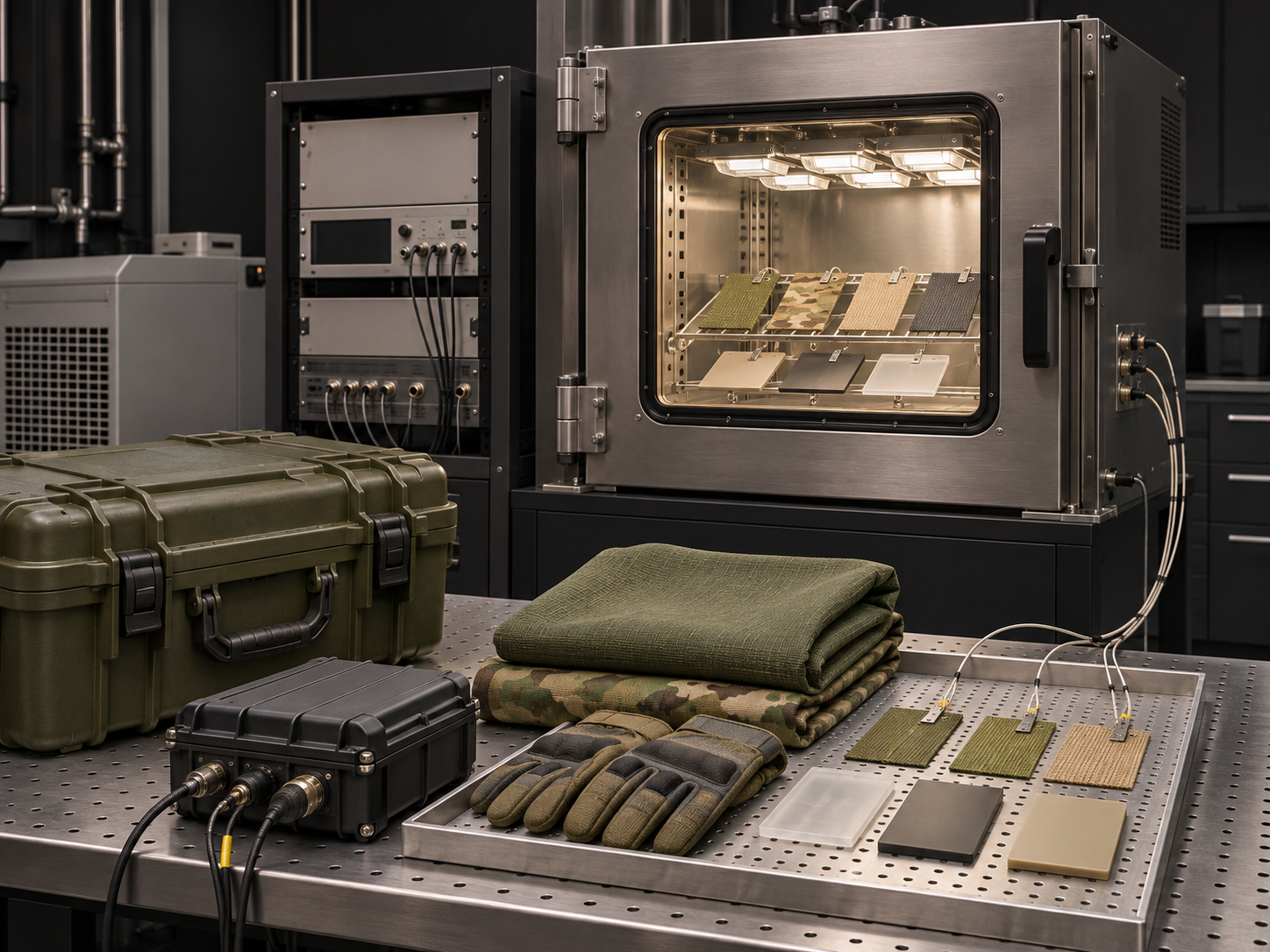
Military equipment encompasses a wide range of materials and designs: textile products, transport containers, plastic housings and coated components. The questions addressed in environmental and material testing are correspondingly diverse.
Defined irradiation tests make it possible to investigate selected influences systematically. Depending on the application, changes in appearance, surfaces or temperature conditions can be examined. Test conditions are derived from the intended use and the specific material question.
BF Engineering develops irradiation solutions for individual samples as well as larger items of equipment. The design considers materials, geometry and the intended test sequence.
Tailor the investigation to the equipment being tested
A textile product places different demands on testing from a closed transport container or an electronic device housing. The relevant load and the properties to be evaluated are therefore defined first.
Comparative tests can examine different material variants, surface treatments or designs. Investigations before and after exposure are planned so that changes can be clearly identified. Required reference samples form part of the specimen programme from the outset.
Typical areas of investigation:
- Colour and surface changes in selected materials
- Heating of housings and containers
- Comparison of different coatings and covers
- Material behaviour after specified UV exposure
- Condition of equipment after defined loading phases
Provide suitable mounting for different materials and composites
Items of equipment often consist of several materials. Textile layers, plastics, metals and coatings can form a single assembly. Testing therefore establishes whether individual materials or the complete composite will be investigated.
Specimen mounting is adapted to the material properties. Flexible samples require different holders from rigid housings. Mounting, backing and orientation are documented so that comparable conditions can be established.
Possible test specimens:
- Textiles, fabrics and coated textile composites
- Plastic housings and covers
- Transport and storage containers
- Painted metal parts and surface samples
- Seals and flexible protective components
Derive the loading conditions from the intended use
The design distinguishes between targeted UV irradiation, solar-like exposure and thermal radiation loading. The appropriate option depends on the effect being investigated.
Irradiance, duration and temperature are defined together. If rest phases, humidity or other loads are required, these are incorporated into a documented sequence. A general exposure duration does not replace an application-specific definition of the test conditions.
Relevant exposure parameters:
- Radiation spectrum suited to the material question
- Irradiance and usable test area
- Exposure duration and radiant exposure, where applicable
- Specimen and ambient temperatures
- Orientation, interruptions and supplementary climatic conditions
Align evaluation with the material’s function
Evaluation methods are selected according to the specimen. Colour changes may be relevant for textile or decorative surfaces, while the investigation of a container may additionally consider temperature development or the condition of the material composite.
Measurement points and criteria are defined before exposure begins. An irradiation test evaluates the agreed load and the associated characteristics. Additional protective or product properties require their own appropriate verification procedures.
Possible evaluation parameters:
- Colour, gloss and surface appearance
- Cracks, delamination and changes in the material composite
- Temperature development on surfaces and inside housings
- Mechanical properties of suitable material samples
- Comparison of defined characteristics before and after exposure
Prepare the test station for different specimens
A test station for different items of equipment requires suitable mounting arrangements and a clearly defined irradiation area. Appropriate adjustment options are determined by the intended specimen formats and test positions.
BF Engineering tailors the system to laboratory workflows and existing infrastructure. Specimen changes, instrumentation and regular verification measurements are considered alongside supply requirements and heat removal.
Relevant integration considerations:
- Range of specimen sizes and material types
- Suitable holders and defined test positions
- Access for sensors and intermediate evaluations
- Interfaces with data acquisition and experimental controls
- Maintenance, cleaning and verification of irradiation conditions
Any questions?
We're happy to help.
BF is a forward-looking company that specializes in the development, manufacture, and optimization of high-precision systems and specialized irradiation equipment for test benches.

Your contact person
Danelis Diaz
Management Backoffice

Never miss a thing
BF is a forward-looking company that specializes in the development, manufacture, and optimization of high-precision lighting systems and specialized illumination systems for test benches.