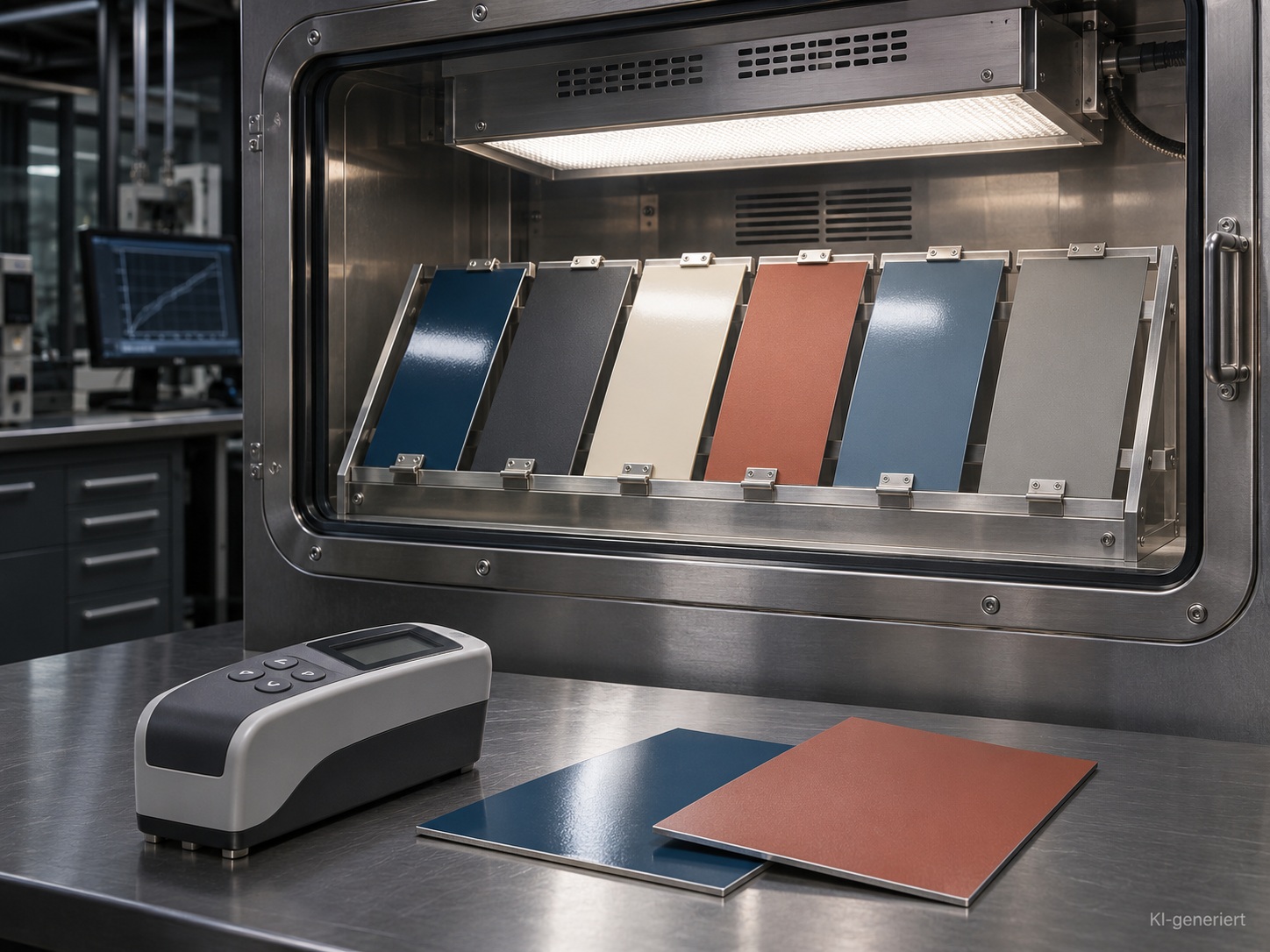
Coatings
Irradiation Testing for Coatings and Surfaces
Coatings perform different functions: they shape the appearance of surfaces, protect the underlying material or give a component specific functional properties. Their evaluation must therefore consider the coating material, the substrate and the complete layer structure.
Laboratory tests make it possible to compare different coating systems under specified conditions. Depending on the procedure, light or UV radiation is combined with temperature and, where applicable, humidity or water. Exposure methods for coatings are described, for example, in the ISO 16474 series.
BF Engineering develops irradiation systems for these test applications. The design is based on the surface, its intended use and the agreed test profile.
Investigate appearance and protective function
Coating testing begins by defining the coating’s purpose. Colour stability may be decisive for decorative surfaces, while protective coatings also require consideration of their condition and bond to the substrate.
Comparative tests can examine different formulations, colours or application conditions. To allow differences to be attributed meaningfully, specimen preparation and initial condition are documented. Exposure is then tailored to the influences being investigated.
Typical areas of investigation:
- Comparison of different paint and coating formulations
- Colour and gloss behaviour during exposure
- Investigation of transparent and pigmented protective layers
- Comparison of different application and curing conditions
- Evaluation of the coating system before and after a loading sequence
Consider the coating and substrate as a complete system
A coating is applied to a particular substrate. Its properties, pretreatment and surface condition therefore form part of the specimen description. Primers, intermediate layers and topcoats are also considered within the intended layer structure.
For comparative investigations, relevant preparation parameters must be defined as clearly as possible. These include layer thickness, curing and the time between preparation and testing. This helps prevent differences in specimen preparation from obscuring the material question being investigated.
Important specimen information:
- Substrate material and pretreatment
- Number and sequence of coating layers
- Layer thicknesses and application methods used
- Curing and conditioning conditions
- Initial condition and specimen identification
Derive the loading sequence from the test objective
The exposure profile defines the radiation to which the coated surface is subjected and the surrounding environmental conditions. Requirements for indoor applications may differ from those for surfaces exposed to outdoor weathering.
Alongside the radiation source, temperature, duration and, where applicable, humidity or wetting phases are defined. If several loads are combined, the system must support the agreed sequence. The required functions are therefore established according to the specific procedure.
Relevant exposure parameters:
- Radiation spectrum and optical filtering, where applicable
- Irradiance at the coated surface
- Specimen and ambient temperatures
- Humidity, wetting and drying phases, where applicable
- Duration and sequence of the individual loading stages
Record visible and functional changes separately
A surface can change in appearance without all functional properties being affected to the same extent. Conversely, changes can occur within the layer structure that are initially difficult to detect through visual inspection alone.
Evaluation therefore combines the methods relevant to the application. Measurement conditions and test locations are defined so that results before and after exposure remain comparable. Investigations that alter or destroy a specimen are considered separately during specimen planning.
Possible evaluation parameters:
- Colour and gloss
- Chalking and changes in surface structure
- Cracking, blistering or delamination
- Adhesion strength according to the agreed test method
- Retention of application-specific surface functions
Reliably accommodate different surface formats
Coatings can be investigated on flat test panels, small specimens or three-dimensional components. The mounting arrangement must orient the relevant surface towards the radiation source in a defined way while allowing access for measurements.
BF Engineering tailors the irradiation arrangement and system configuration to the intended specimens. If climatic or wetting functions are required, their interfaces are planned together with the system partners involved.
Relevant integration considerations:
- Specimen formats and position of the surfaces to be tested
- Mounting arrangements that avoid unwanted shading of the test area
- Connection to temperature control and climatic functions, where applicable
- Documentation of operating times and exposure conditions
- Accessibility for specimen changes and regular verification measurements
Any questions?
We're happy to help.
BF is a forward-looking company that specializes in the development, manufacture, and optimization of high-precision systems and specialized irradiation equipment for test benches.

Your contact person
Danelis Diaz
Management Backoffice

Never miss a thing
BF is a forward-looking company that specializes in the development, manufacture, and optimization of high-precision lighting systems and specialized illumination systems for test benches.