Continuous Irradiation
Continuous Irradiation for Photovoltaic Modules and Solar Cells
Photovoltaic devices can change their electrical behaviour during prolonged light exposure. Depending on the cell technology and test conditions, investigations may focus on stabilisation processes or light-induced changes. Such investigations are often referred to as light soaking.
Defined continuous irradiation makes it possible to track these developments over a specified period. Alongside the radiation spectrum and irradiance, specimen temperature and electrical operating state are particularly relevant. Different test profiles are therefore used for different investigation objectives.
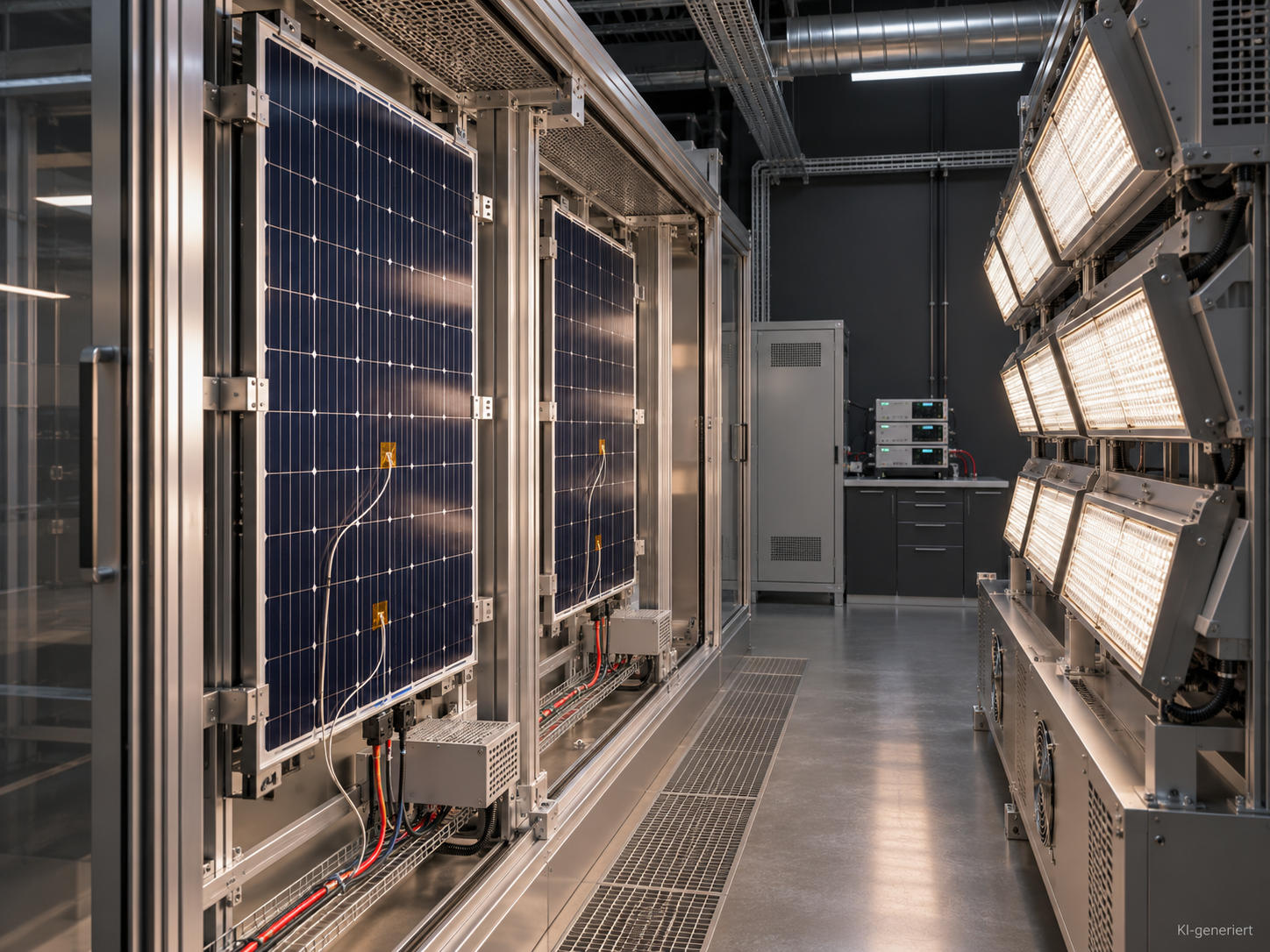
BF Engineering develops irradiation systems for extended testing. The design is based on the module technology, the required test area and the intended thermal and electrical boundary conditions.
Identify changes during light exposure
Continuous irradiation is used to investigate how a specimen behaves under sustained light exposure or a defined exposure profile over time. Depending on the objective, the development of a stable state or changes in selected characteristics may be examined.
The investigation objective determines when measurements are taken and when the test ends. Possible criteria include specified exposure times, defined radiant exposures or previously agreed stability criteria. These criteria must suit the cell technology and the procedure used.
Typical areas of investigation:
- Light-induced stabilisation of photovoltaic test specimens
- Changes in electrical characteristics during exposure
- Comparison of different cell and module technologies
- Influence of different temperature and operating conditions
- Comparison of development stages under identical load profiles
Provide defined light conditions over extended periods
During longer tests, the applied exposure must remain traceable throughout the entire test sequence. Irradiance at the specimen plane and its spatial distribution are therefore defined. Spectral requirements are also established to suit the investigation.
The characteristics of the radiation source can change during operation. The system concept therefore includes suitable monitoring and verification measures. For comparative tests, it is also important to record actual operating times and interruptions.
Key design parameters:
- Spectral distribution suited to the test objective
- Irradiance across the active test area
- Spatial distribution over the entire specimen
- Stability and monitoring during extended operating phases
- Recording of exposure time and accumulated radiant exposure
Define temperature and electrical state systematically
Light exposure alone does not fully describe a continuous irradiation test. A specimen under open-circuit conditions can behave differently from one under short-circuit conditions or at a controlled operating point. The electrical state is therefore defined as part of the test procedure.
The actual specimen temperature is equally important. It results from radiation absorption, electrical power output and heat transfer to the surroundings. Temperature control and electrical load must therefore be considered together with irradiation.
Relevant operating conditions:
- Specified specimen temperature and permissible deviations
- Electrical operation under open-circuit conditions, short-circuit conditions or a defined load
- Operation at the maximum power point, where applicable
- Airflow and thermal coupling of the specimen
- Defined transitions between irradiation, measurement and rest phases
Document developments over time in a traceable way
A single measurement at the end of a long exposure only shows part of the behaviour. Repeated intermediate measurements can help identify trends and possible differences between specimens.
If specimens are removed from irradiation for measurements, the timing, duration and conditions of the interruption must be documented. The time between the end of exposure and electrical characterisation can also affect comparability. The measurement strategy is therefore established before testing begins.
Important measurement and documentation parameters:
- Irradiance and exposure duration
- Specimen temperature profile
- Electrical operating state during irradiation
- Characteristics at agreed measurement times
- Interruptions, rest periods and conditions during intermediate measurements
Prepare the test setup for extended operating periods
Continuous irradiation tests place demands on the electrical supply, heat removal and monitoring. The system concept must support the intended operating procedure and define how deviations or faults are handled.
BF Engineering coordinates the irradiation equipment, specimen mounting and interfaces with the existing laboratory environment. Accessibility for verification measurements and the handling of planned maintenance interruptions are also considered.
Relevant integration considerations:
- Electrical supply and thermal system concept
- Integration of electrical loads, temperature control and data acquisition
- Monitoring of relevant operating parameters and limits
- Documentation of operating states and interruptions
- Accessibility for specimen changes, maintenance and verification measurements
Any questions?
We're happy to help.
BF is a forward-looking company that specializes in the development, manufacture, and optimization of high-precision systems and specialized irradiation equipment for test benches.

Your contact person
Danelis Diaz
Management Backoffice

Never miss a thing
BF is a forward-looking company that specializes in the development, manufacture, and optimization of high-precision lighting systems and specialized illumination systems for test benches.